
Week Fourteen: "Signed, Sealed & Delivered"
- Elio Singer
- Apr 17
- 3 min read

Hello, reader! This week, I focused on adding more M. Gladden Staple and Fancy Groceries receipts to the online collection. After going through one of the Gladden binders, I happened upon more receipts written out to Mr. Arthur J. Willis, who was Mr. Gladden's close confidant and another civic leader in early 20th-century Apopka. Most of the receipts were from the year 1929, which I had assumed was the extent of what Ms. Boykin recovered. However, this new small collection ranged from 1929 to 1931! Excitedly, I added these new artifacts to the Arthur J. Willis Collection, now available to view on the website.
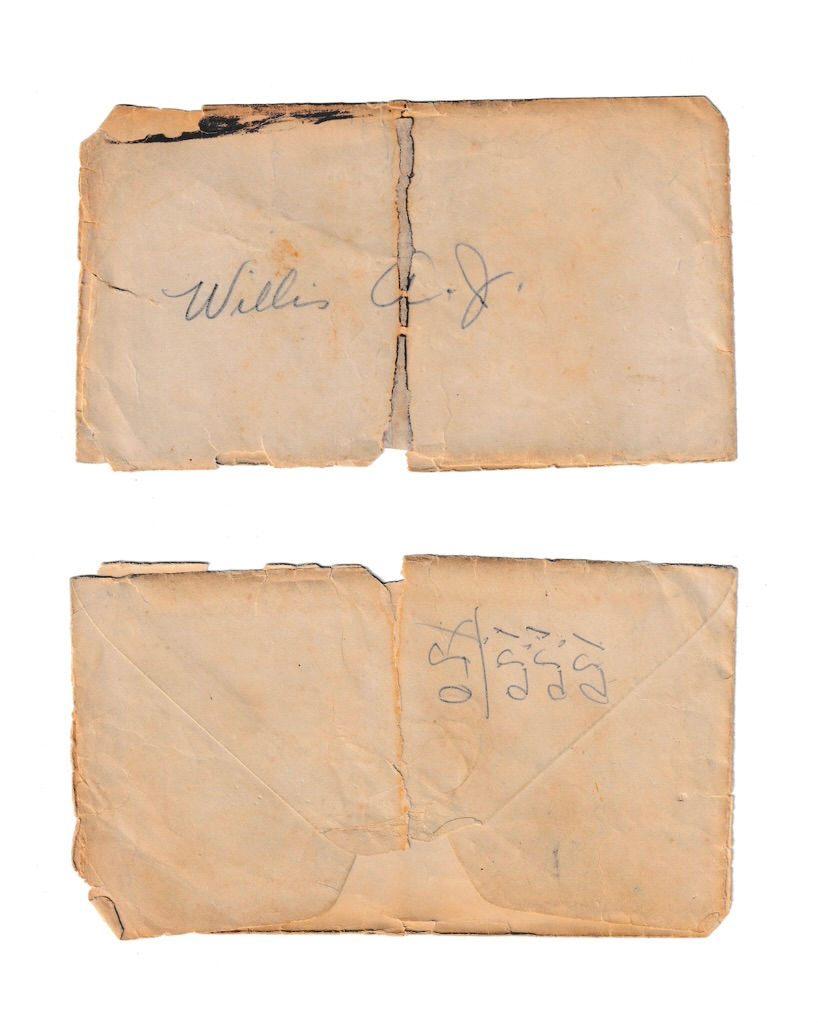
One of my more mundane discoveries with these new receipts was rooted in my curiosity about their function. During the height of the Great Depression, Michael Gladden Jr. reused blank envelopes as receipt materials. These envelopes are covered with names, amounts, withdrawals, and calculations made by Mr. Gladden himself. I have consistently noticed a select few envelopes in which the flap is fused, and the top is cut open, as one would with a letter opener. These envelopes typically have a name written on them as well. After examining the A. J. Willis envelope more closely, I now suspect that Mr. Gladden may have used these objects as miniature folders to hold receipts for the corresponding safekeeping or credit account. Growing up in the museum world, I was always challenged to dive deeper into the "why" behind an object's use. While this may not be a groundbreaking discovery, I have never encountered such a close examination of how material necessity incited innovation in Black American communities. No matter how small, every observation is essential to discovering more about the man behind the receipts.
On Thursday, I met with Mr. Lou during my workday at the Museum of Military History to check in on updates regarding the Gladden Archive. Mr. Lou shared that he plans to introduce me to a Black veteran of the Vietnam War, Mr. Henry. Mr. Henry owns a collection of letters from the Vietnam War. Mr. Lou told me some of these letters were left undelivered. If Mr. Henry is amenable to it, I would love to digitize his collection and acknowledge his role as a safekeeper and storyteller.
Additionally, Mr. Lou and the president of the Osceola Branch of the NAACP, Rev. Nina Hill, may have identified another Black safekeeper and community leader who shares a very similar background to Michael Gladden Jr. This man was Mr. Oscar Duncan, a Korean and Vietnam War veteran who would later own and operate a beloved community grocery store. Mr. Duncan opened Duncan's Food Mart in his mid-30s, seeking a new direction after his military and law enforcement career. According to the limited information I could find, his grocery store was located in Eatonville, next to a laundry business run by his wife, Bernice. A legal document I found online described Mr. Duncan as the store's cashier, cook, cleaner, and finance manager. Duncan's Food Mart operated for nearly 20 years until Mr. Duncan suffered a series of serious illnesses. According to FindAGrave.com, Mr. Duncan is buried in Cape Canaveral National Cemetery. Though Mr. Duncan came after Mr. Gladden's time, the same spirit of entrepreneurship and community stewardship drove his life's purpose. I hope to collaborate with Rev. Hill on this new project in the future, and it may well become a future subject of my safekeeper research. Though next week marks the last of my internship, my future with this project is just beginning to unfold. See you next week, reader!


Comments