
Week Three: "Lucky Star"
- Elio Singer
- May 29
- 3 min read


Hello, reader! This week has brought a lot of new excitement and opportunities my way. I started the week by sending in my final exhibit proposal to STARS. Today, I am glad to report that I have just received a response from Sarah Norris, the Digital Initiatives Coordinator of UCF Libraries Digital Scholarship. She expressed that the head of Digital Scholarship, Mairelys Lemus-Rojas, wanted to set up a meeting with Dr. French and me to further discuss my needs and prospects for the Gladden Digital Exhibit project. I was delighted to hear that STARS has taken an interest in Mr. Gladden’s story and look forward to meeting Mairelys soon.
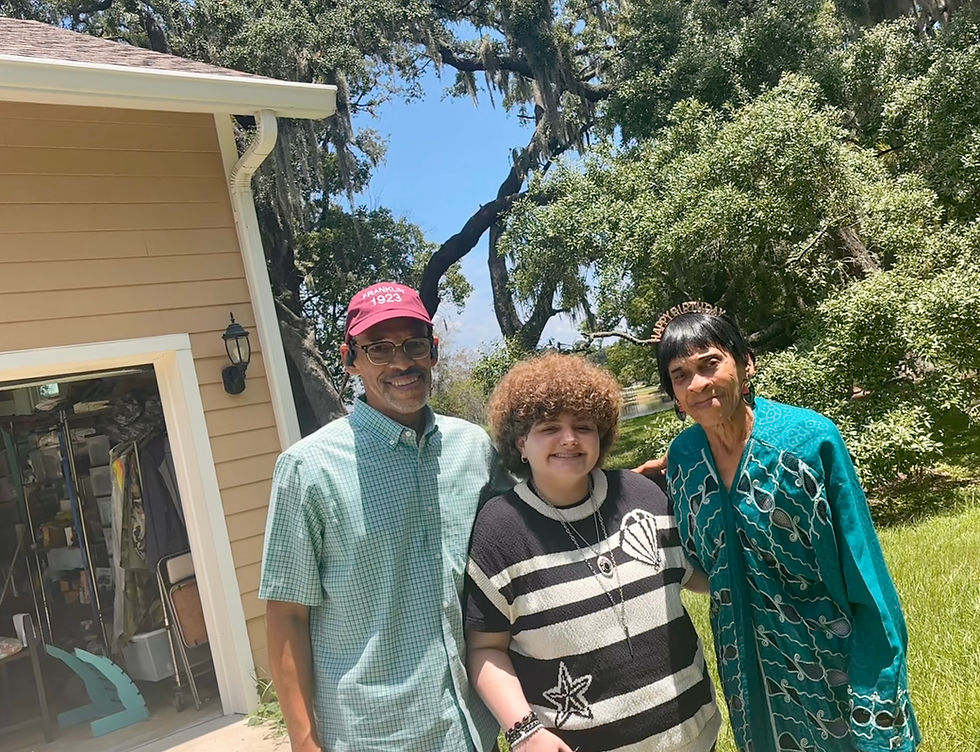
Speaking of exciting developments, I was invited back to the Franklin property to record my very first oral history session with Ms. Louise Franklin of Maitland. During our last visit, Ms. Franklin’s son, Mr. Kelvan, expressed to me that it was one of his priorities to record Ms. Franklin’s story. Since she is approaching her 90th birthday in July, it was extremely important that I initiate the filming process before I started digitizing the first portion of the Franklin Collection for future use on the Franklin family website and the Gladden Archive. At our previous meeting, Ms. Franklin came to me with concerns about her oral history potentially being run through an AI platform or used by YouTube to train GenAI. I prepared researched solutions to the problem of AI affecting files that are digitally archived. During my research, I was disappointed to see that the issue of GenAI in archives is being largely embraced, especially with its widespread implementation in museum/institutional software. When I first started in collections, I was trained on the extremely rudimentary PastPerfect 5.0, which was an extremely outdated but endearing program. Though at times 5.0 and I had a strained relationship, I would take the finicky, 90s nouveau software over unreliable AI startups any day! In my search, I was pleased to see that some institutions, such as the UVA Library, have set forth AI protocols in order to protect the data and privacy of their collections. To my knowledge, UCF has no public protocol for AI use in its archival databases. I decided on using a combined strategy of a copyright screen, multiple watermarks, and disabling downloads on the developer side. After presenting these strategies to Ms. Franklin and Mr. Kelvan, both approved and appreciated that I took their concerns seriously. Finally, it was time for lights, camera, action!
The first oral history Ms. Franklin and I recorded was about the Franklin property’s rich history, starting with its founders, Larkin and Effie Franklin. The Franklin estate was built on what was known as Maitland’s dump, purchased for only $600 in 1923. Ms. Franklin recounted parts of her childhood spent at the estate, including her chores of collecting eggs from the chickens and her and her siblings receiving oak trees for their birthdays. She also highlighted the Franklin estate’s reputation as a community space for Maitland and Eatonville’s Black community. Numerous baptisms, birthdays, scouting trips, and dips in the lake would occur on the property over its over 100 years of existence. The oral history went very well, and I can’t wait to post it on the future Gladden Archive YouTube channel!
Continuing the theme of surprises, Mr. Kelvan told me he wanted my help with the Franklin family website, which is managed by his twin daughters. I was put in contact with the twins, hopefully leading to another web project for myself to help with. More to come next week, reader. See you then!


Comments